What Is Terrazzo? A Brief History
Terrazzo is a flooring and surface material made by embedding aggregate pieces — marble, granite, quartz or glass chips — in a cement or epoxy binder, then grinding and polishing the surface to a smooth finish. Its roots stretch back to 15th-century Venice. Terrazzo became a favourite of modernist architecture and spread across the Middle East and Mediterranean. With the design renaissance of the 2020s, it has once again become a sought-after choice in both residential and commercial projects.
💡 Why now? A design world tired of the cold monotony of plain-colour tile has rediscovered terrazzo's rich, unique character.
Modern Terrazzo Types
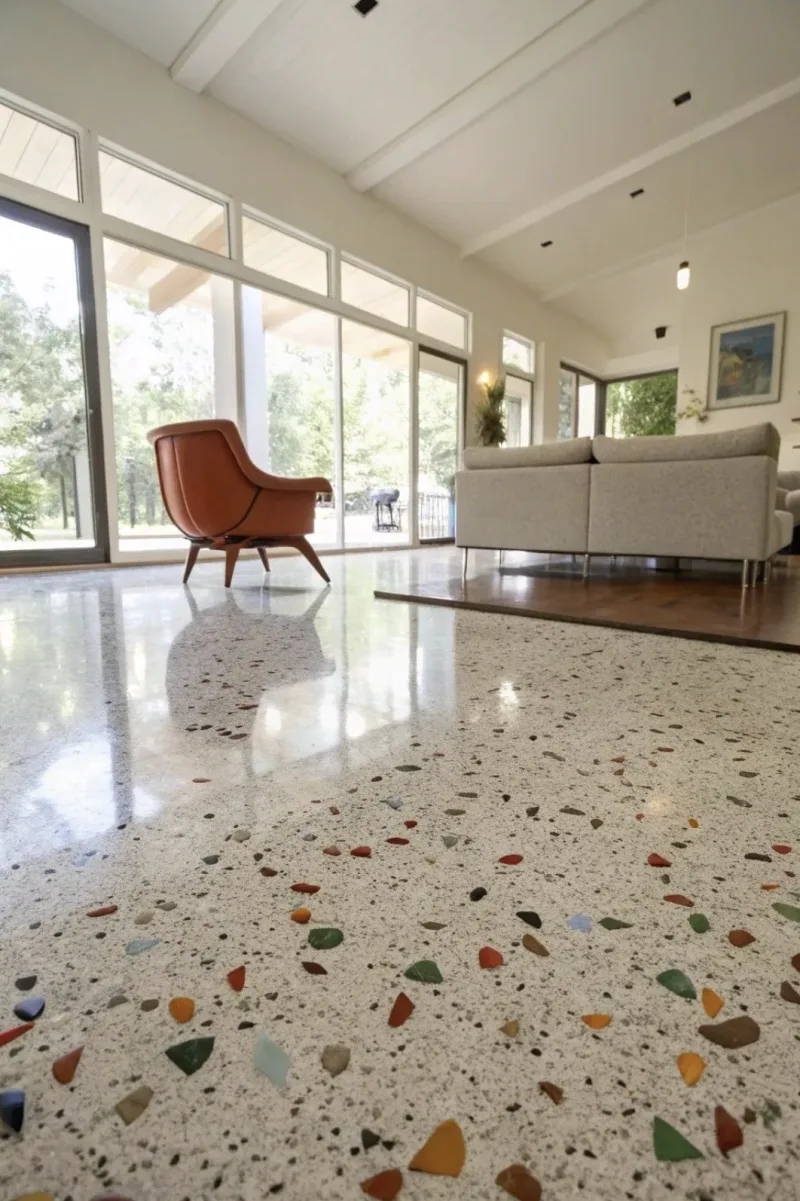
- Cast-in-place terrazzo (monolithic) — Applied directly to the floor. Completely seamless; creates a powerful effect in large areas.
- Prefabricated terrazzo tiles — Factory-made tiles laid on site. Shorter installation time; ideal for smaller areas.
Where Can It Be Used?
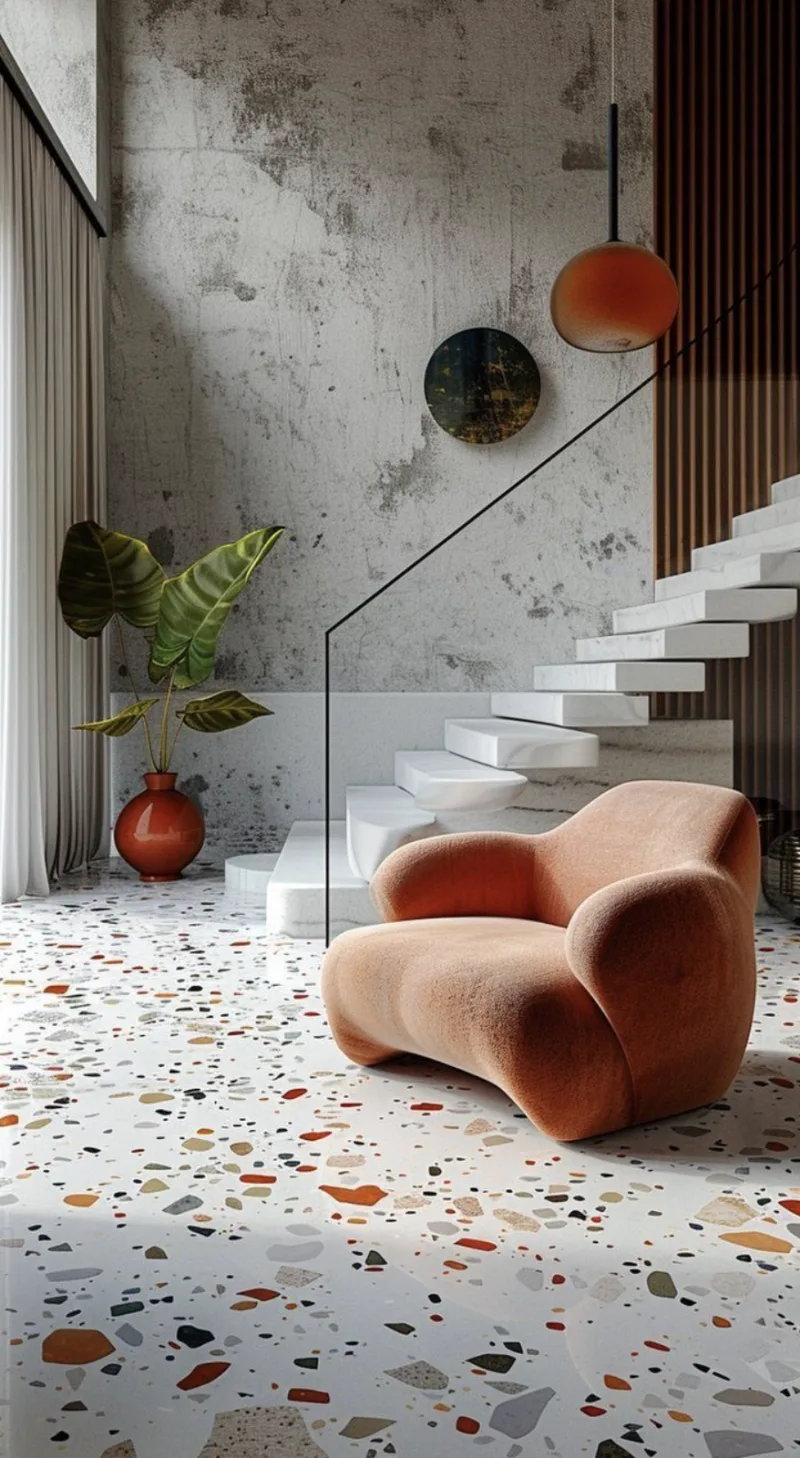
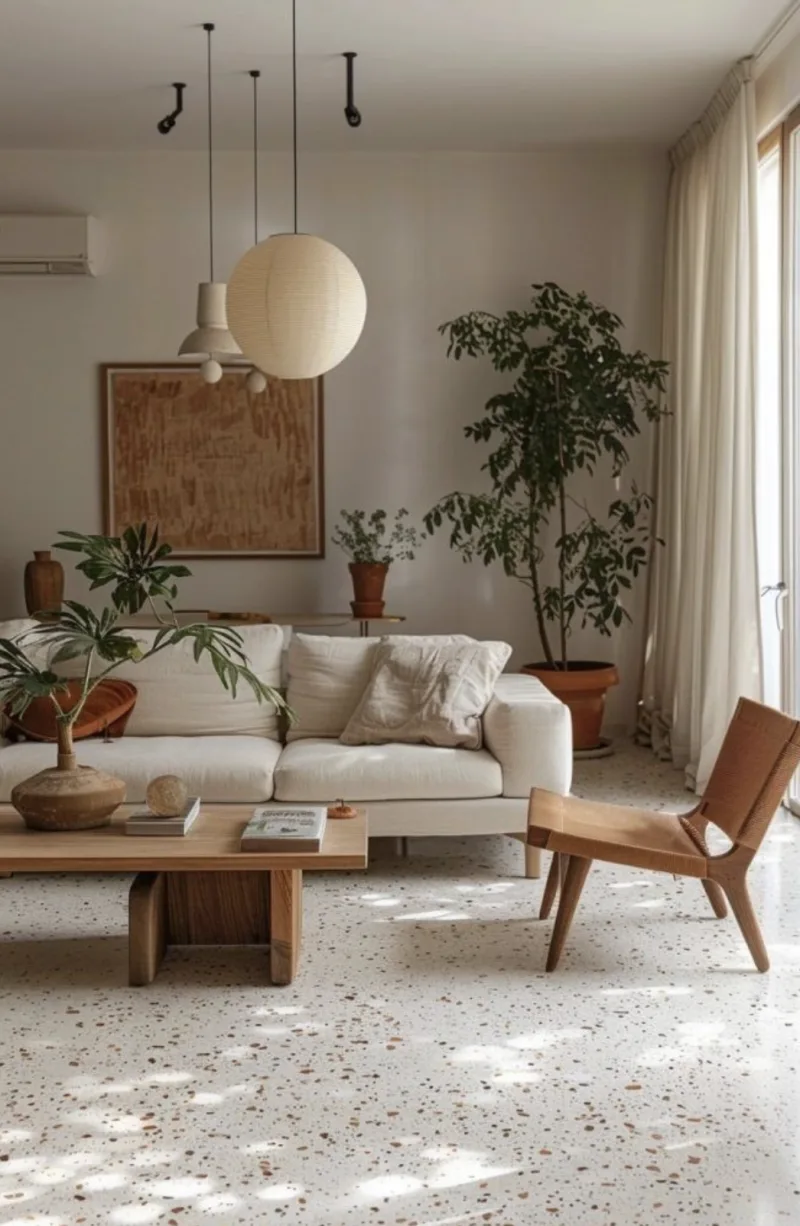
- Living room and entrance floors — Creates a sense of endless, light-playing flooring.
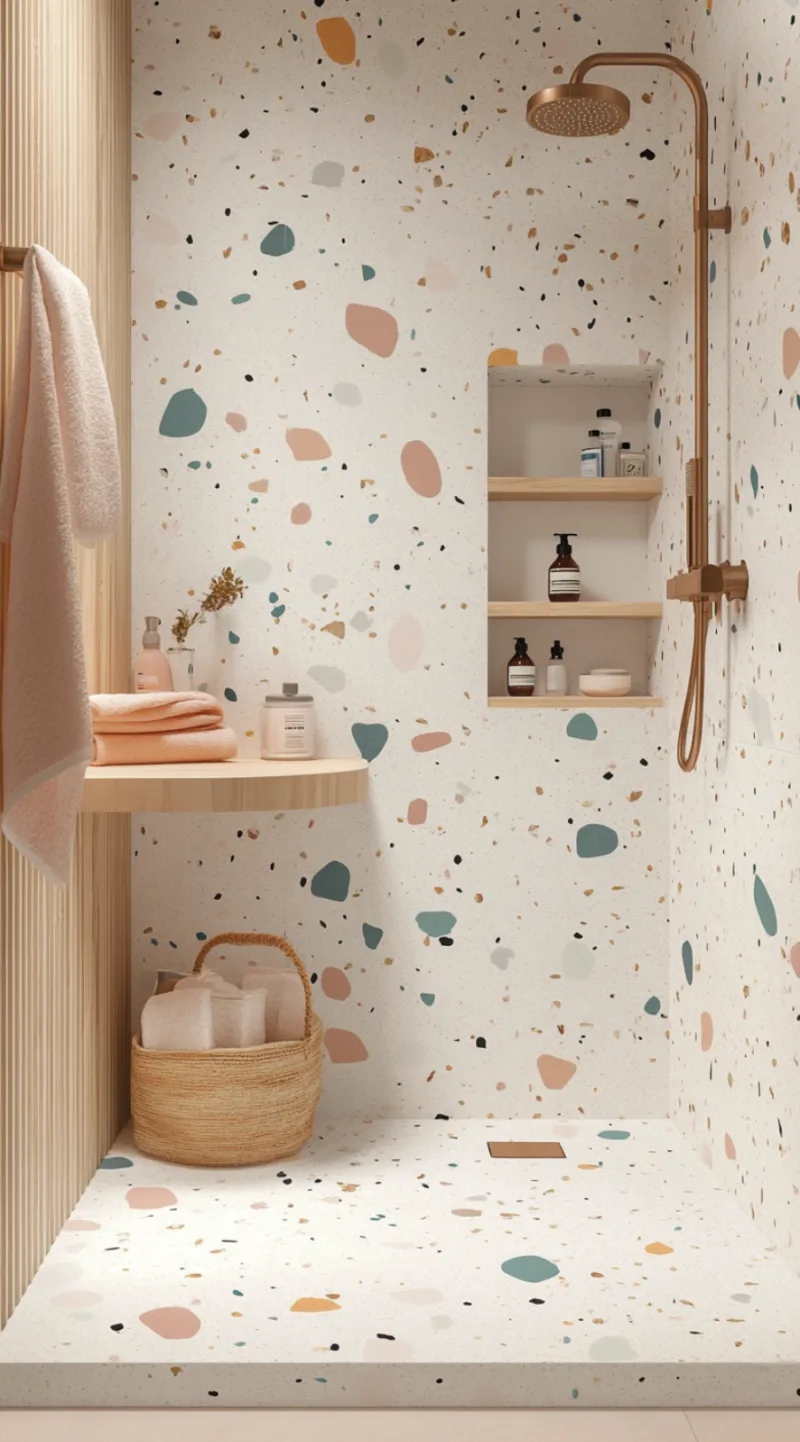
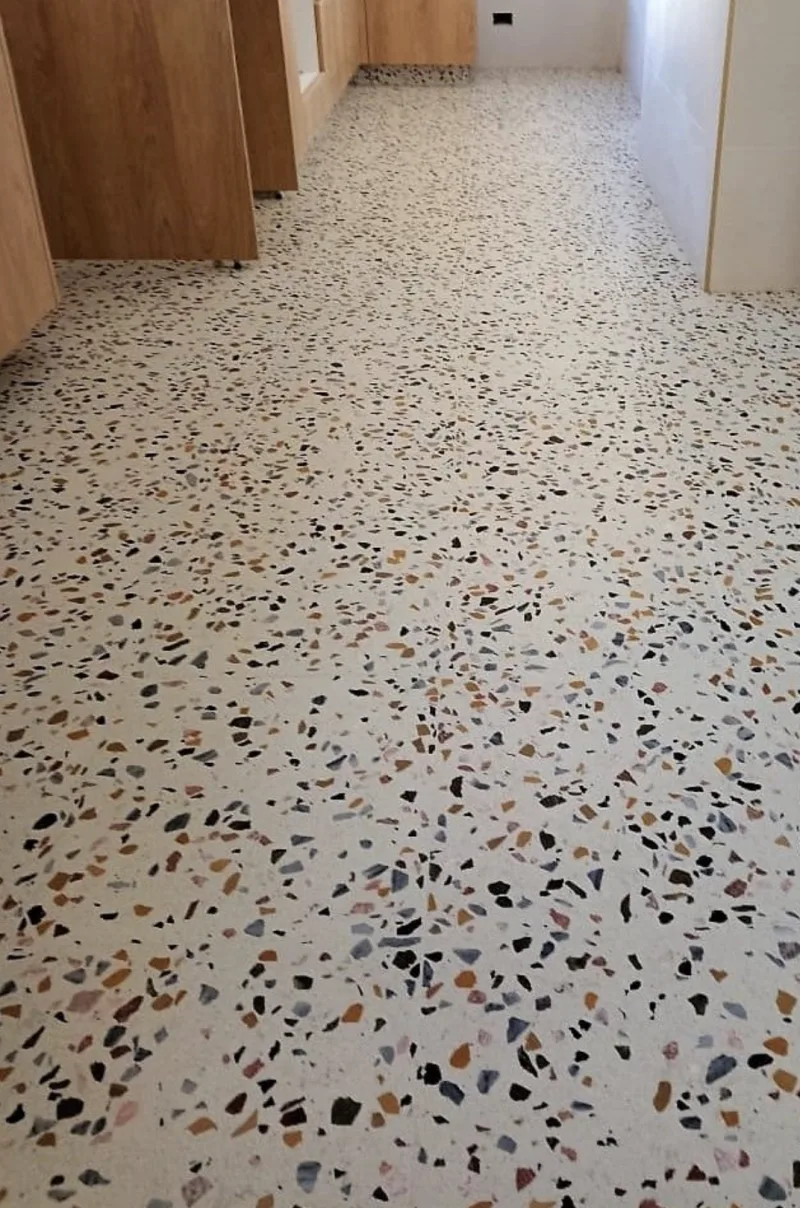
- Bathroom floors and walls — Water-resistant surfaces using small aggregate and epoxy binder.
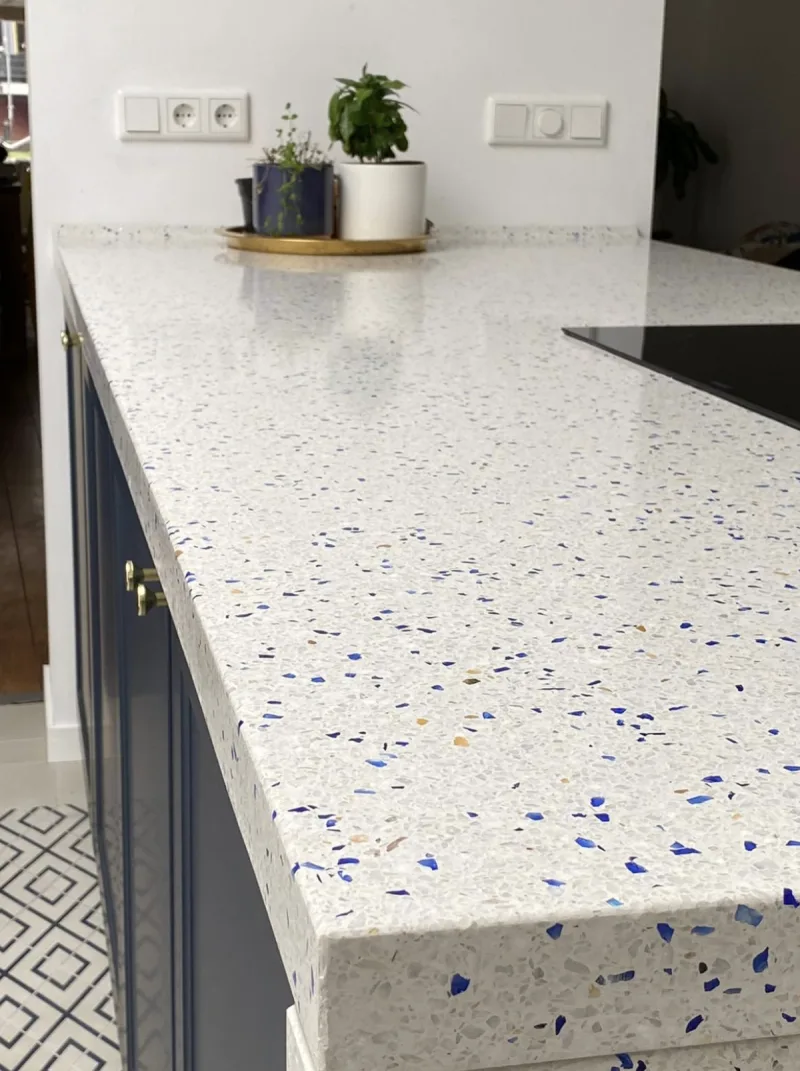
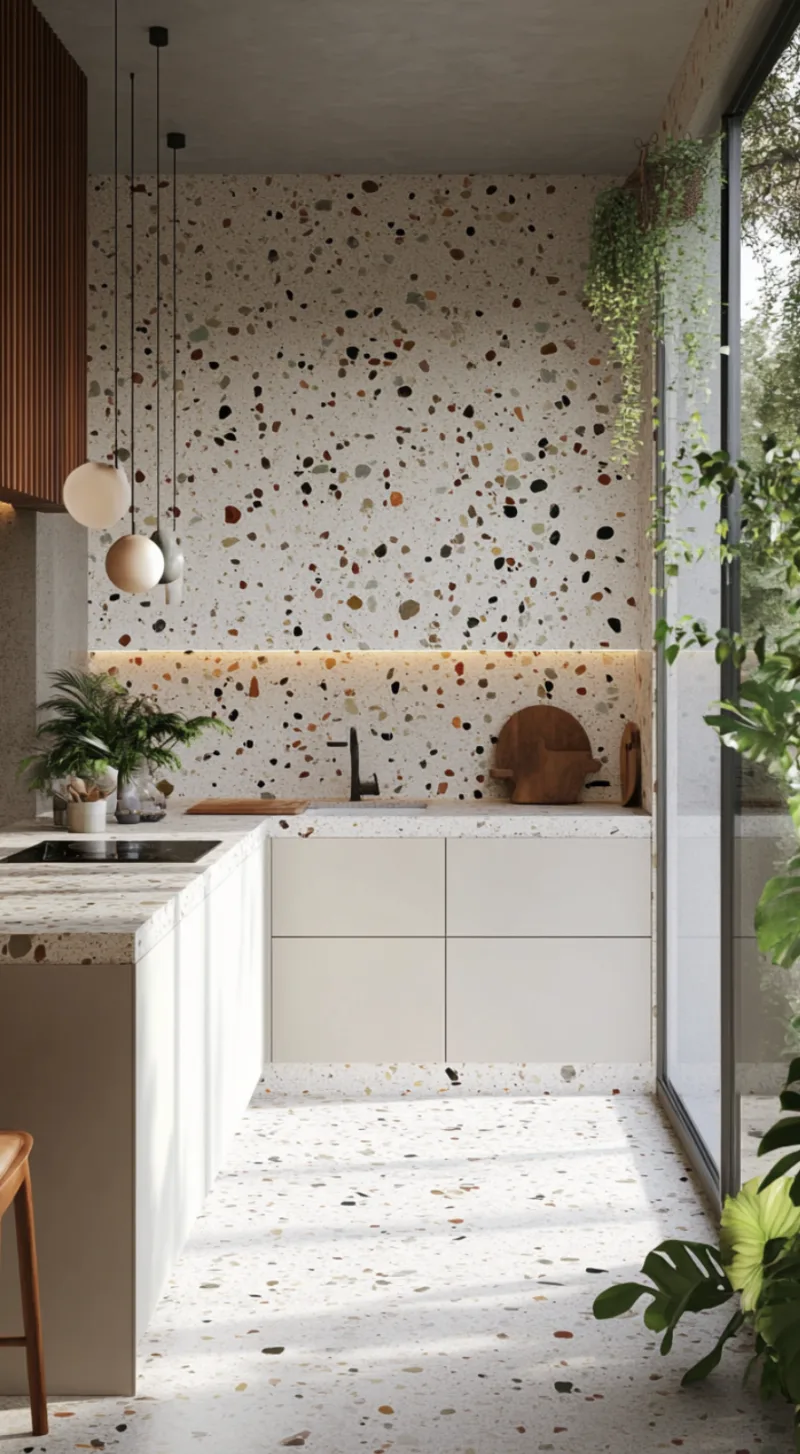
- Kitchen worktops — A compelling alternative to granite and quartz with unlimited customisation.
- Stairs and landings — High abrasion resistance makes it ideal for heavy-traffic areas.
- Outdoor areas and terraces — Works well outdoors with weather-resistant specifications.
Terrazzo vs Ceramic
| Feature | Terrazzo | Ceramic / Porcelain |
|---|---|---|
| Uniqueness | Every surface is one of a kind | Mass-produced pattern |
| Durability | 50+ years (with proper maintenance) | 15–25 years |
| Grout lines | None (cast-in-place) | Yes |
| Repair | Can be re-polished and restored | Broken tiles must be replaced |
| Customisation | Unlimited | Limited to manufacturer's catalogue |
| Installation time | Long (casting + curing) | Short |
| Cost | High | Wide range |
Application Examples
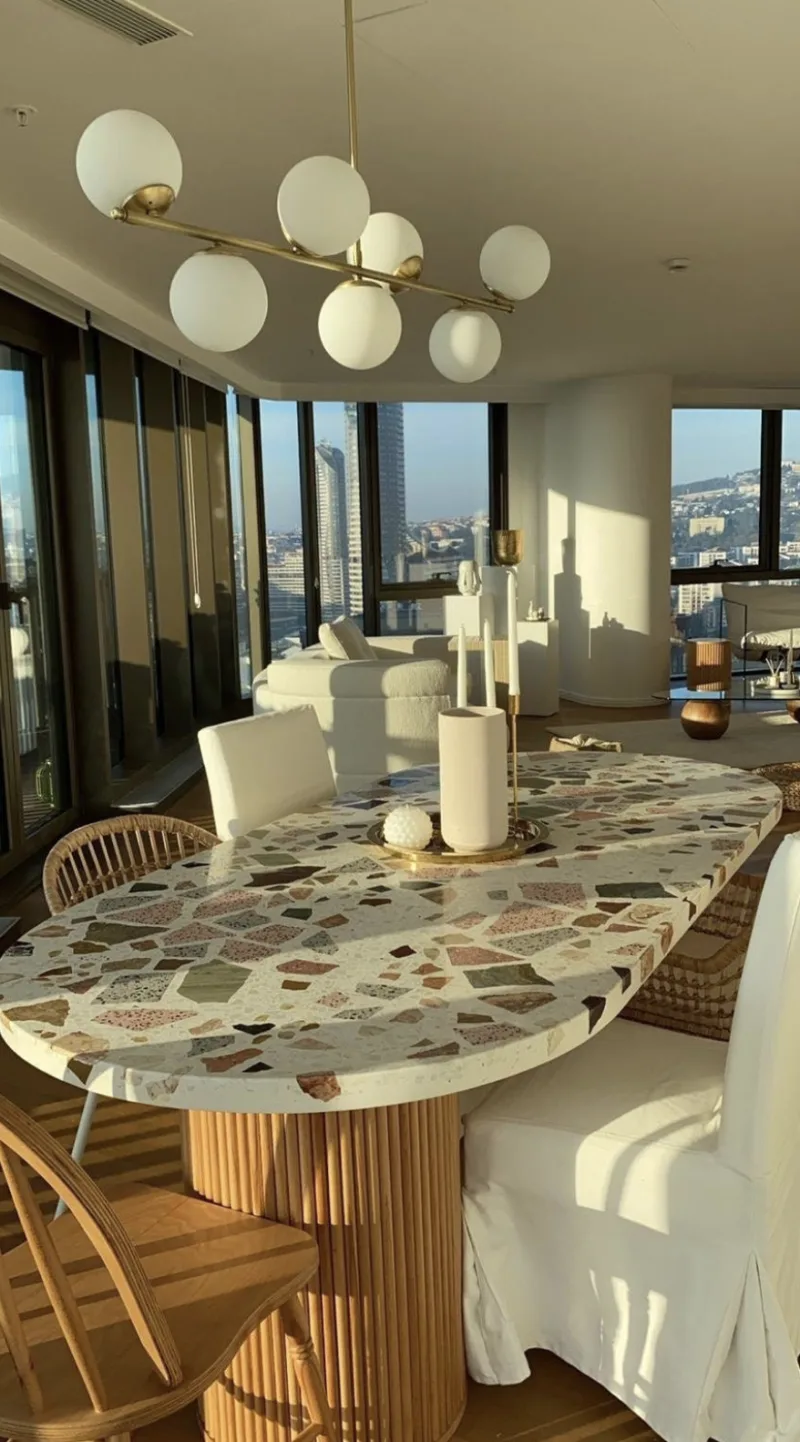
Below are example photos of terrazzo floor and worktop applications.
The Application Process
- Sub-floor preparation — Levelled and consolidated; a moisture barrier is applied.
- Divider strips — Brass, zinc or aluminium strips for expansion joints; can also form decorative patterns.
- Pouring the mix — The aggregate-binder mixture is poured and levelled.
- Curing — 7–14 days for cement-based terrazzo.
- Grinding and polishing — Progressive polishing reveals both smoothness and the beauty of the aggregate.
- Sealing — A stain-resistant sealer is applied as the final step.
ℹ️ Curing in Antalya's heat: Extreme summer heat can accelerate curing and cause cracking. Experienced teams work in the early morning and cover the surface with damp cloth or protective sheeting.
Maintenance and Repair
- Use a pH-neutral, acid-free cleaner; citrus-based products will leave terrazzo dull.
- Professional grinding and re-sealing every 3–5 years restores original brilliance.
- Small cracks can be repaired with specialist fillers — complete replacement is not necessary.
- Wipe up staining agents such as coffee and red wine promptly.
💡 With a 50+ year lifespan and virtually zero replacement cost, terrazzo is one of the most economical flooring choices over the long term.
To book a free site visit for your terrazzo project in Antalya, please use our contact page.