When Your Neighbours Can Be Heard in Your Home
The television next door, footsteps from upstairs, voices in the stairwell or traffic noise from the street... Noise is one of the most common complaints in apartment buildings. In Antalya, windows left open in summer, the turnover in short-term rental flats and thin partition walls in older buildings make the problem even more noticeable.
The good news is that much of this noise can be reduced significantly with the right work inside your own flat. However, soundproofing follows different rules from thermal insulation: the wrong material or a single forgotten gap can greatly reduce the effect of the work. In this guide we explain how sound reaches your home and which solution works for which kind of noise.
💡 Key principle: Soundproofing rests on four rules: mass (heavy surfaces stop sound better), decoupling (the new surface must not be rigidly connected to the existing structure), absorbent material in the cavity and airtightness (sealing even the smallest opening).
First, Identify the Type of Noise
- Airborne noise: Voices, music, television, a barking dog. The sound travels through the air and passes through by making the wall, door or window vibrate. Wall, door and window solutions are effective against this type of noise.
- Impact noise: Footsteps from upstairs, dropped objects, chairs being dragged, slamming doors. The sound hits the floor slab directly and travels through the concrete structure. It is the hardest type of noise to deal with, because its real source is usually your neighbour's floor.
- Building and plumbing noise: Water running in waste pipes, the lift, pumps or a boiler room. It usually comes from the building's common areas and requires changes to the plumbing or equipment.
Knowing which kind of noise you are dealing with is the first step to applying the right solution to the right surface. For example, work on the walls will not give the expected result against footsteps from the flat above.
Seal the Weak Points First
Like water, sound passes through the smallest opening. Before starting a major job, check these points; sometimes they alone make a noticeable difference:
- Back-to-back sockets: If the sockets on both sides of a wall shared with the neighbouring flat are aligned, it is almost as if there were a hole in the wall.
- Gaps under and around doors: The gap under the front door and worn seals carry stairwell noise straight inside.
- Window seals: Worn or poorly closing frames are the main entry route for street noise.
- Pipe and cable penetrations: Gaps around pipes passing through walls and floors.
- Ventilation ducts and shafts: Bathroom and kitchen ducts can carry sound between floors.
For a Shared Wall: An Independent Drywall Lining
The most effective solution against voices, television and music coming through a wall shared with a neighbour is to build a second, decoupled wall in front of the existing one.
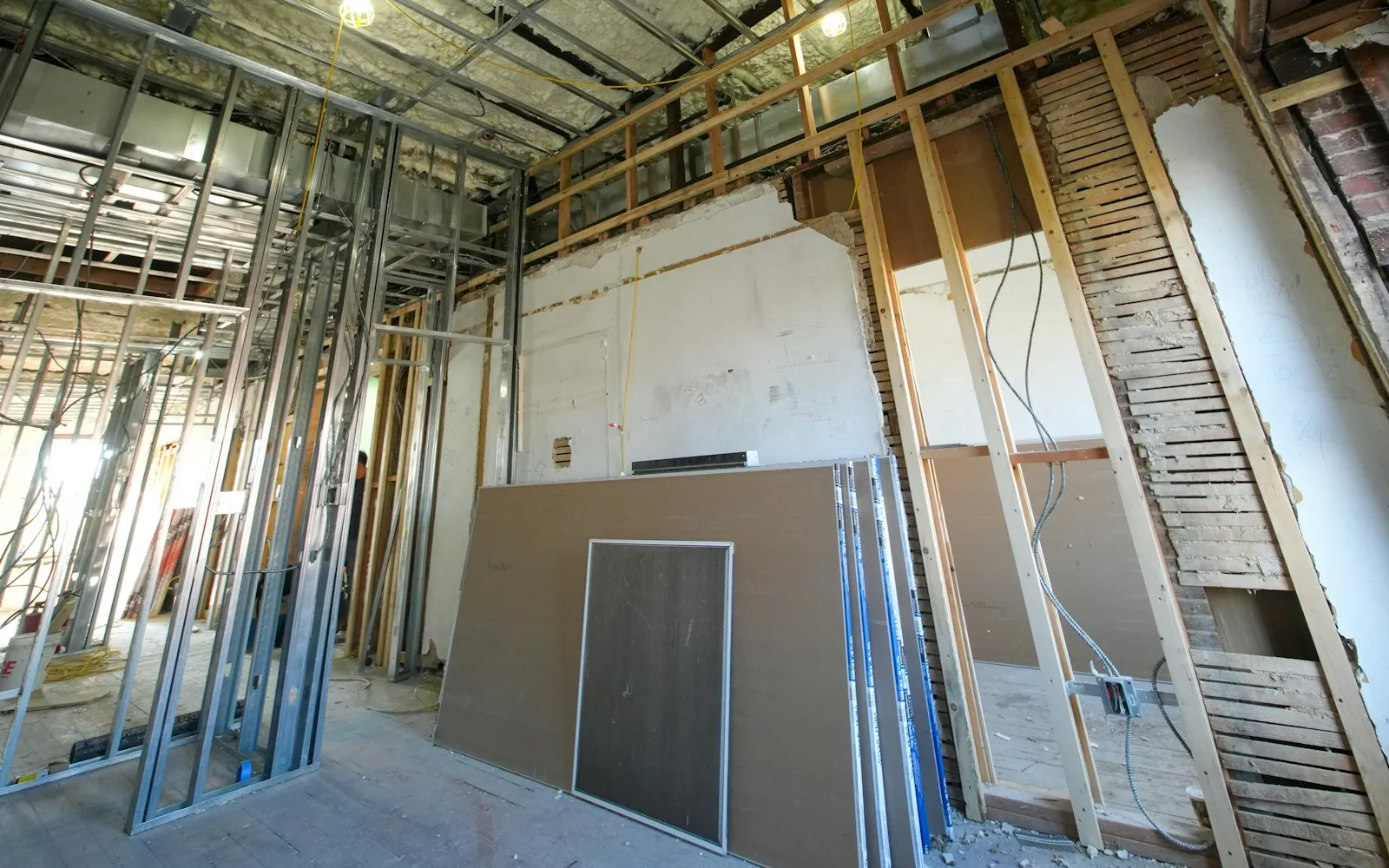
- A metal stud frame is built in front of the existing wall without touching it. Isolation strips are used where the studs are fixed to the ceiling and floor.
- The cavity between the studs is filled with a sound-absorbing material such as stone wool.
- The frame is covered, preferably with two layers of high-density plasterboard. The joints of the boards are staggered so they do not line up.
- The perimeter joints and socket boxes are completely sealed with an elastic sealant.
This work takes up some floor space and requires the sockets, switches and any radiator on that wall to be repositioned. For general information on drywall work, see our drywall and false ceiling guide.
For Noise From Upstairs: An Acoustic Suspended Ceiling
Voices and music from the flat above can be reduced with a decoupled suspended ceiling. The logic is the same: the ceiling profiles are hung from the concrete on special vibration-isolating hangers, stone wool is placed in the cavity, the plasterboard is applied in two layers where possible, and the edges are not rigidly fixed to the walls.
Realistic expectations matter: because impact noise such as footsteps hits the floor slab directly and travels through the structure, it can be reduced, but not eliminated, by work on your ceiling alone. The most effective solution at the source is impact sound insulation in the floor of the flat above, which can only be done as part of your upstairs neighbour's own renovation.
For Your Downstairs Neighbour: The Floor
If you are renewing your own floor, this is the best moment to reduce the impact noise reaching the flat below. Impact sound underlays are used under parquet and laminate, and sound insulation layers under ceramic and stone finishes. In major renovations, a floating screed is the most effective solution. For flooring options, see our flooring guide.
For the Stairwell: The Front Door
Most of the noise from the building corridor comes through the front door. A heavy, solid-core door, a continuous seal around the frame and an automatic drop seal at the bottom make a clear difference. The gaps where the door frame meets the wall must also be filled.
For Street Noise: Windows and Glazing
In flats facing a main road, a school, a nightlife area or a hotel zone, the window is the main source of noise.
- Panes of different thickness: Double glazing with two panes of different thickness blocks sound better than panes of the same thickness.
- Laminated (acoustic) glass: Laminated glass with a sound-damping interlayer is an effective option on noisy facades.
- Airtightness: Even the best glass will not perform as expected if the frame does not close well or the joint with the wall has gaps.
- Shutter boxes: Uninsulated roller shutter boxes are a weak point where sound gets in.
For window options, see our door and window replacement guide.
Common Mistakes
- Only sticking on egg-box panels or acoustic foam: These materials reduce echo inside the room but do not stop sound from next door.
- Screwing plasterboard directly onto the existing wall: The new surface vibrates together with the old wall and no decoupling is achieved.
- Leaving gaps open: If socket boxes, perimeter joints and ceiling-to-wall junctions are not sealed, the result drops noticeably.
- Assuming thermal insulation is sound insulation: Not every insulation material absorbs sound in the same way. A material with sound-absorbing properties should be used in the cavity.
- Focusing on a single surface only: Sound can also travel around through side walls, the ceiling and the floor. To set the right expectations, the path of the sound must be identified before the work.
How Much Difference Does It Make?
Properly installed soundproofing often makes voices and television unintelligible and noticeably improves everyday comfort. But be wary of solutions that promise complete silence. Low-frequency sounds such as bass-heavy music and footsteps are the hardest to block. The result depends on the structure of the building, the paths the sound takes and how carefully the work is done.
Checklist Before Renovating
- Note which room the noise reaches, which wall or ceiling it comes through and at what times of day it increases.
- Identify the type of sound: voices and music, footsteps or plumbing noise?
- Check the sockets on the shared wall, the gap under the door and the window seals.
- If there is plumbing noise, ask for that problem to be solved first.
- Include wall, ceiling, door and window work in the same plan as any other renovation you are doing. Work done together with electrical and painting jobs is both cleaner and less disruptive.
💡 What determines the price? The cost of soundproofing depends on the size of the surfaces to be treated (walls, ceiling, floor), the number of layers in the chosen system, the boards and insulation material used, repositioning sockets and radiators, and whether doors and windows need replacing. A reliable quote can only be given after an on-site survey.
Let's Inspect Your Home Together
If you want to reduce the noise reaching your flat in Antalya, we first examine on site which paths the sound takes, then plan wall, ceiling, door and window solutions to suit your needs. You can review our drywall and ceiling and door and window replacement services and book a free survey through our contact page. The survey and quote are free of charge.